
Cultivating the Future:
Scientific Validation of Frass with RBGE
In 2021, Entocycle partnered with the Royal Botanic Garden Edinburgh (RBGE), one of the UK’s most prestigious scientific institutions, to conduct a rigorous trial on the impact of black soldier fly (BSF) frass on plant health. Over a four-month period, different plant types were tested against a peat-free control mix, revealing that frass was beneficial or non-detrimental to 94% of the trials. With a 78% overall success rate, this collaboration provides the critical scientific evidence needed to position frass as a viable, sustainable organic fertilizer for commercial horticulture, demonstrating superior root development and enhanced plant vigour compared to standard compost.
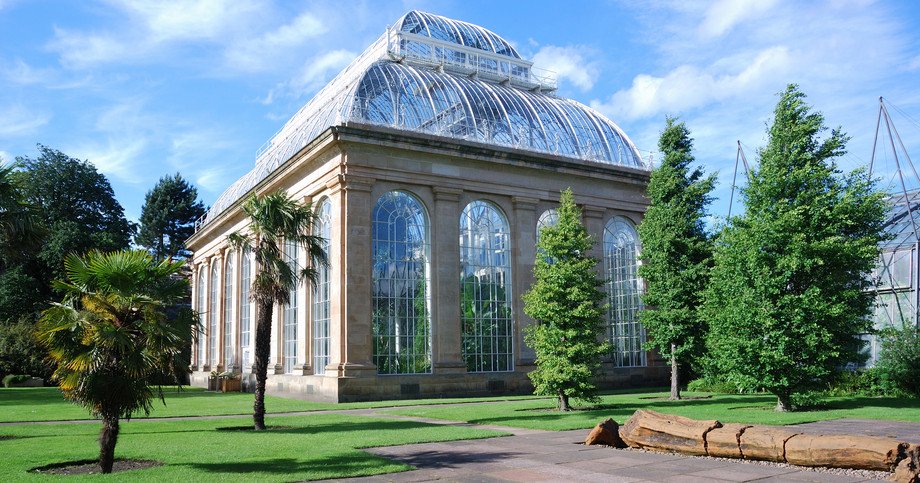
We partnered with the Royal Botanic Garden Edinburgh (RBGE) in 2021 to trial the effects of frass on various types of plants, with the goal being to gain scientific data and insight into specific improvements that frass provides to plant health, soil quality and biodiversity.
We potted different plant types with a mix of RBGE’s regular compost and our frass fertiliser, along with a batch of the same plants with a control compost of PEAT free meclor mixture, so we could easily witness our frass’ effectiveness.
The results of this trial clearly indicate that the addition of frass in compost positively influences plant health:
The frass was either beneficial or non-detrimental to 94% of the trials.
Overall trial success rate of 78%.
These overwhelmingly positive statistics demonstrate frass’ suitability for commercial horticulture, giving customers confidence before switching to frass compost mixtures for plant health and reducing the risk for growers trialling frass at scale.
Partnering with a renowned institution such as the Royal Botanic Garden Edinburgh not only gives us access to a wide range of plants we typically wouldn’t be able to source, but this collaborative project further establishes ourselves as a reliable and credible partner in the sustainability, horticultural and agricultural industries.
“Entocycle were a pleasure to work with and were extremely happy for me to arrange the different Genus and speciees of plants for the trial. This helped me gain a better understanding of the frass’ use in horticulture.”
Containing high levels of nitrogen, phosphorus and potassium, frass is a naturally occurring, nutrient-rich organic fertilizer.
Frass is a by-product left behind after our black soldier fly larvae have devoured their feedstock at our Centre for Insect Technology, and we were curious to test out the true benefits of adding it to compost mix to aid plant health for a number of reasons.
We’d been considering for a while how we would market the product, as we’re very conscious of our waste management and we didn’t want to simply throw something away that’s incredibly valuable and beneficial to nature.
Whilst we knew of its benefits for plants, we wanted to conduct our own research to not only clarify our predictions, but to also have our own dataset that we could utilise.
Alongside the above, when the opportunity arose to conduct this experiment with the Royal Botanic Garden Edinburgh, one of the most prestigious scientific centres in the UK, we jumped at the chance. Not only does collaborating with this exquisite organisation adhere to our wish to test our frass on plant health, but they also add a deep level of credibility to the study which strengthens our branding.
This opportunity came about by our team reaching out to RBGE, asking if they would be interested in collaborating with us to trial our frass.
“I’m really impressed with the results of the trial and believe the frass is definitely a good thing to add to our compost mix.”
Trial Objectives
1 - Scientific Validation
Validate the impact of frass on plant health, soil quality and biodiversity across a range of plant types.
2 - Credibility and Partnership
Partner with the Royal Botanical Gardens of Edinburgh to ensure scientific credibility and independent validation of results.
3 - Commercial Readiness
Utilise trial outcomes to support frass positioning, marketing and evidence-led commercial conversations.
Trial Goals
To grow x2 variations of each selected plant, one in a control soil mix and the other in the same soil mix with the addition of 10% frass.
Implementation
Our entomology team ran this experiment with the team at RBGE on a mixture of different plants that had various requirements:
Plants that prefer acidic and neutral conditions
Plants that are continuously wet
Plants that are continuously dry
Well known British garden plants
The plant selection was picked by RBGE’s Nursery Horticulturalist, Graeme MacDonald, whom we collaborated closely with during this trial.
We ensured to test on a mix of environmental preferences to understand the scope of opportunity our frass can have on plants, along with testing on typical British garden plants since that’s a clear market for us.
We shipped 15g of frass up to their site, and the RBGE team tended to the plants during the trial. Graeme recorded the growth rate of each plant’s foliage and roots, both in the control mix and the frass mix - to easily compare results.
Initially potting these plants in July 2021, we ran the experiment up until November of the same year to give the plants a fair amount of time to grow and reap the benefits of the frass mixture.
Once the trial was complete, the team sent the treated plants down to us here in London to be analysed by our entomologists.
Challenges
As we were experimenting with various plants, some of the plants we chose to experiment with have natural preferences for different climates. The results for these plants are not in line with the success of other plants, and we believe this is due to the fact that their climate preference is different. For this reason, it’s hard to know if frass would be beneficial to them in their ideal climate, as this is something we simply are unable to test here in the UK, and we don’t want to make generalist statements that could turn out to be false.
We ran this experiment during the summer/autumn and whilst the results showcase positive correlation between adding frass and healthier plants, we’re unsure if the experiment would be more/less successful in different seasons due to environmental differences. We’d be keen to run a year-long experiment with RBGE, so we gain results for all the seasons and account for all environmental changes, ensuring that we understand the full scope of our frass’ capabilities.
“The main challenge I found was keeping the pots wet enough once they had grown, as the growth was amazing in the primula and others.” stated Graeme.
Results
| Plant | Observed Result with Frass |
|---|---|
| Acer | Longer foliage, overall better growth. |
| Meconopsis | Stayed green longer. |
| Teucrium | Better regrowth after pruning. |
| Lavender | Better regrowth after pruning. |
| Cirsium | Flowered quicker. |
| Angelica | Stayed green longer. |
| Primula | Grew more dense, bulkier form. |
| Ind. Gramineae | Bulked faster, longer growth. |
| Osmanthus | Lusher and longer regrowth. |
| Verbena | Healthier and bigger. |
| Cornus | Lusher and longer regrowth. |
| Hyssopus | Flowered quicker and lusher. |
| Viburnum | No real noticeable difference (these plants were pricked not long before the trial). |
| Iris | Looks healthier. |
| Eryngium | No real noticeable difference. |
| Pinus | Better growth. |
| Crataegus, Rosa and Berberis | Regular growth, remained covered in powdery mildew (these plants dislike being in pots - results are as expected). |
| Embothrium | Did not react well to frass. |
With a 78% success rate, this experiment clearly indicates that the addition of frass in compost positively influences plant health.
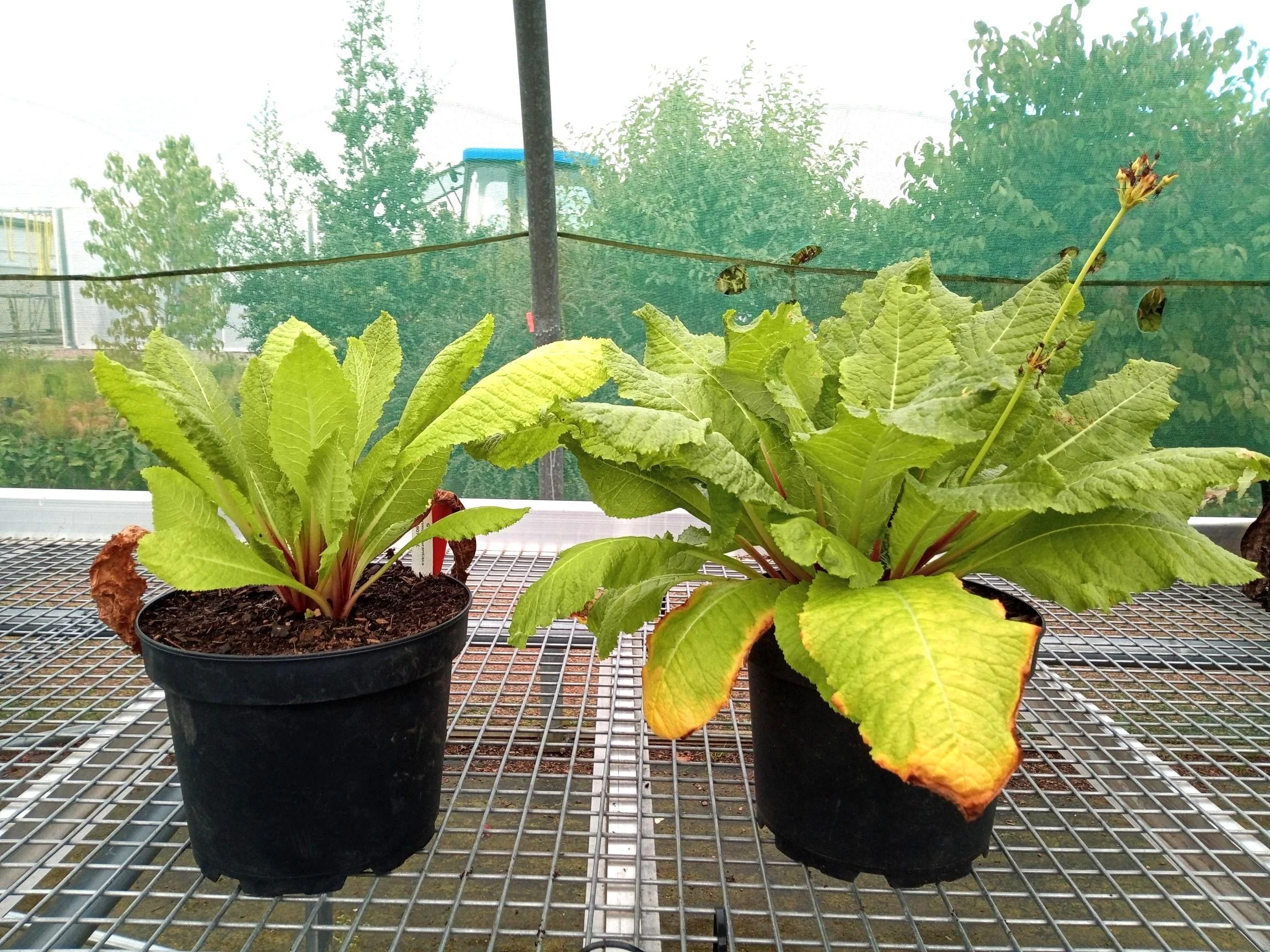
Primula plant pictured above.
Control compost mix (left) compared to Entocycle’s frass fertiliser compost mix (right).
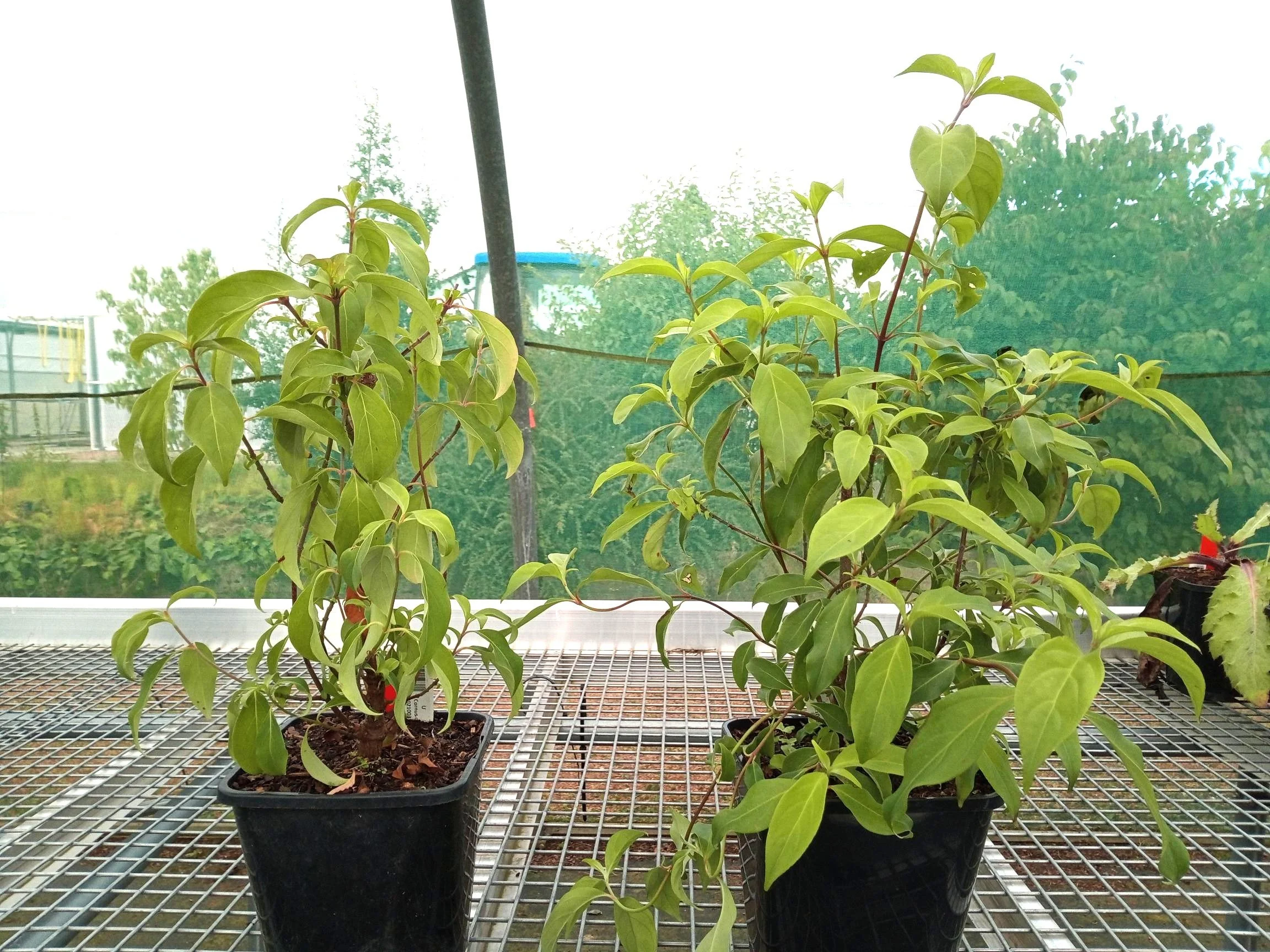
Cornus plant pictured above.
Control compost mix (left) compared to Entocycle’s frass fertiliser compost mix (right).
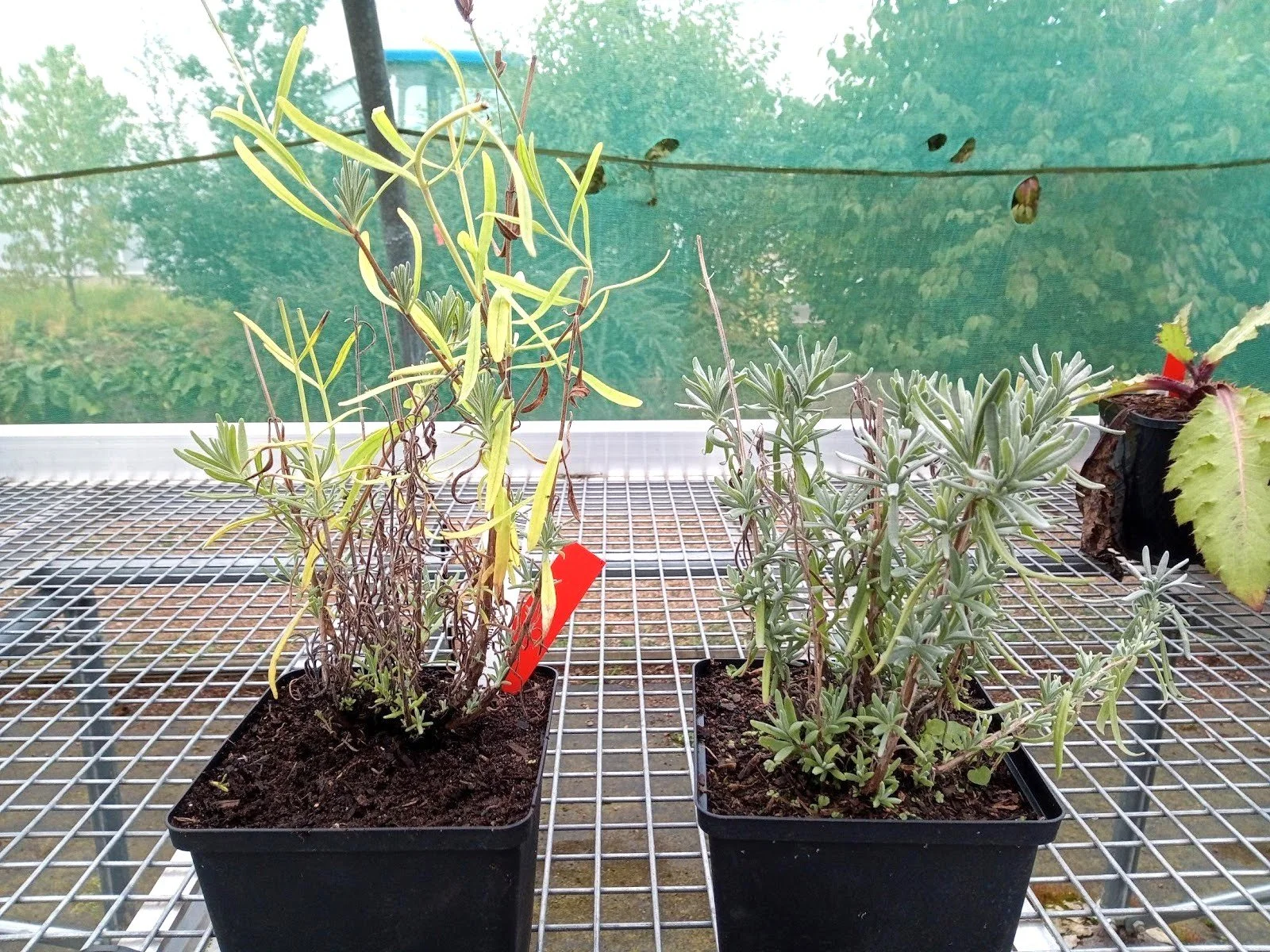
Lavender plant pictured above.
Control compost mix (left) compared to Entocycle’s frass fertiliser compost mix (right).
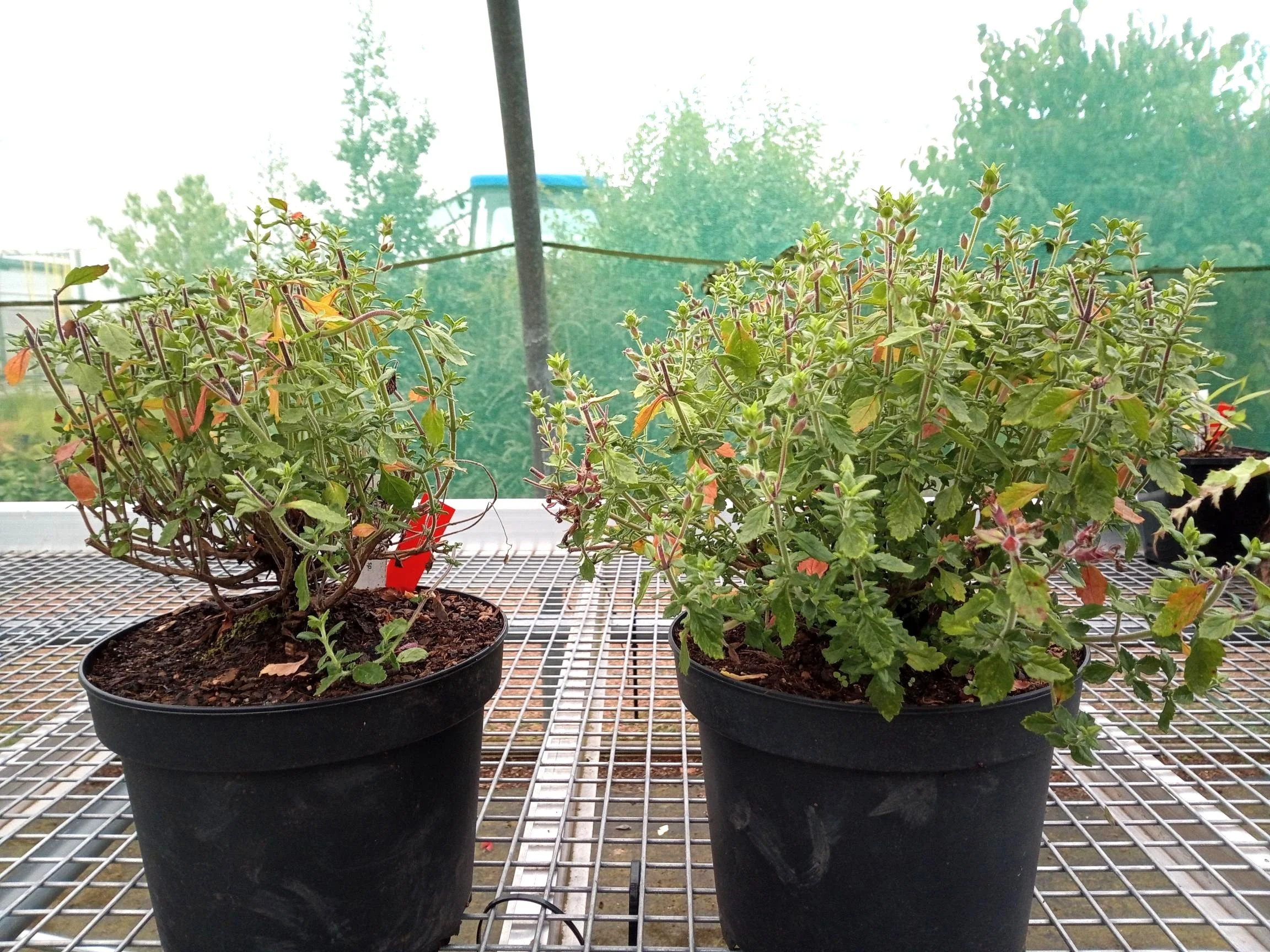
Teucrium plant pictured above.
Control compost mix (left) compared to Entocycle’s frass fertiliser compost mix (right).
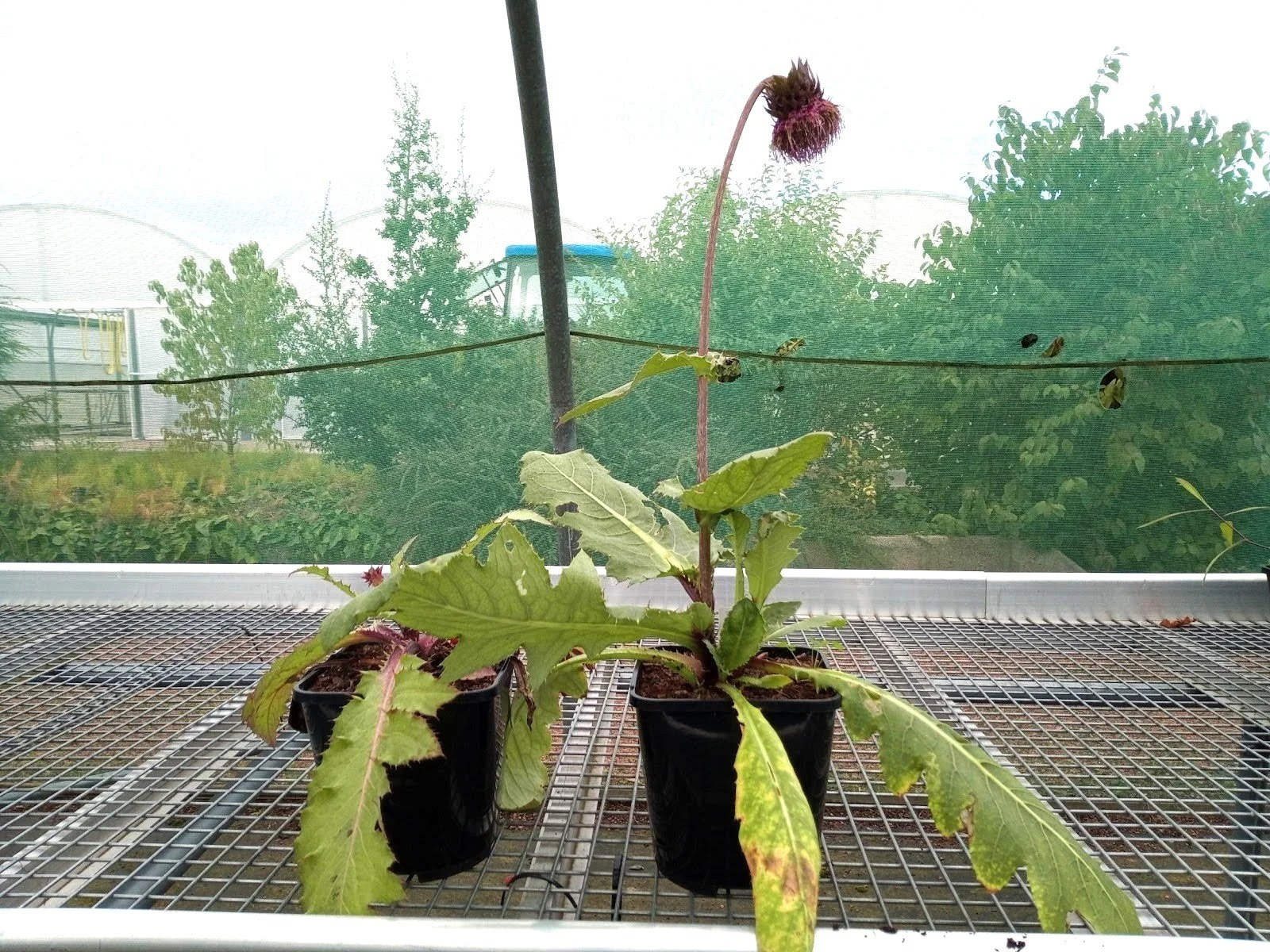
Cirsium plant pictured above.
Control compost mix (left) compared to Entocycle’s frass fertiliser compost mix (right).
Growth
Many plants exhibited overall better growth, longer foliage and greater vigour:
Acer
Ind. Gramineae
Verbena
Pinus
Primula in particular showed more dense and bulkier growth.
Regrowth
After pruning, the following plants had lusher and healthier regrowth:
Teucrium
Lavender
Osmanthus
Cornus
Flowering
Two plant types flowered quicker than usual:
Cirsium
Hyssious
Neutral Response
A few plants showed no noticeable difference, which we expect is from the plants being pricked out shortly before the trial:
Viburnum
Erygium
Negative Response
One plant (Embothrium) did not react well to the frass mixture, however the RBGE team expected this due to the plant’s specific requirements for volcanic soils with poor phosphorus availability - “This plant grows on volcanic soils in Chile, I expected this [result] to be honest as this one was always going to be the challenge of the plants I chose, due to the specific requirements of the plant” - Graeme MacDonald, Nursery Horticulturalist.
If we exclude the Embothrium’s results due to the predicted negative reaction, the frass was either beneficial or non-detrimental to 94% of the trials.
Overall, the plants grown with the frass look more vigorous and healthy with substantial root systems that have developed after four months of being potted with frass mix, along with shoots developing faster.
The frass mix re-hydrated faster than the standard compost mix, so it may perform better if left to dry out more, however the tested plants didn’t show any negative effects to this, it may just need to be a consideration for other plants.
All of the above findings demonstrate frass’ suitability for commercial horticulture and gives customers confidence before switching to frass included compost mixes.
“The roots on the plants grown in the frass look far superior to those in our regular mix.”
“The plants are still holding onto their leaves, with no signs of winter dormancy, whilst the control plants are showing signs of shutting down for the winter.”
Impact
The team at RBGE were very impressed with the effectiveness of our frass as an addition to their regular compost mixture, flooding us with positive feedback:
This trial has enabled us to show the positive statistics of utilising frass in addition to compost mixture, therefore reducing initial hesitation and concerns before committing to full-scale deployment, reassuring them with positive results.
By highlighting that frass is one of our only by-products in our factory, and us actively looking at ways to re-introduce the mixture into nature, it demonstrates our desire for a full circular economy and become a factory leading the way for waste management solutions.
Partnering with a renowned institution for this trial fuels the results with credibility and reliability, additionally developing not only our brand positioning within the industry, but also increases our exposure to new markets.
“I would definitely like to grow more plants in the frass next season, I believe it will be very beneficial for our plants. When using the frass from pricking out to its final potting stage, we should have more success in keeping small plants happy and give us a better chance of saving rarer species!”