
The Centre for Insect Technology:
Redefining the Standard for Insect Farming
Located in the heart of London, the Centre for Insect Technology (CfIT) is Entocycle’s flagship modular research and development facility. Designed and built by our in-house team of entomologists and engineers, this site serves as a world-class demonstrator that provides clients with tangible proof of modular scalability and operational excellence.
The CfIT bridges the gap between lab-scale research and industrial reality, delivering industry-leading results that include doubling egg yields, achieving a 25% average feedstock conversion rate, and pioneering high-speed optical dosing of 3,000 neonates per second. By showcasing our patented technology in a real-world working factory, we remove uncertainty for investors and provide a robust platform for testing diverse feedstocks—proving that sustainable insect protein can be produced efficiently in any environment.
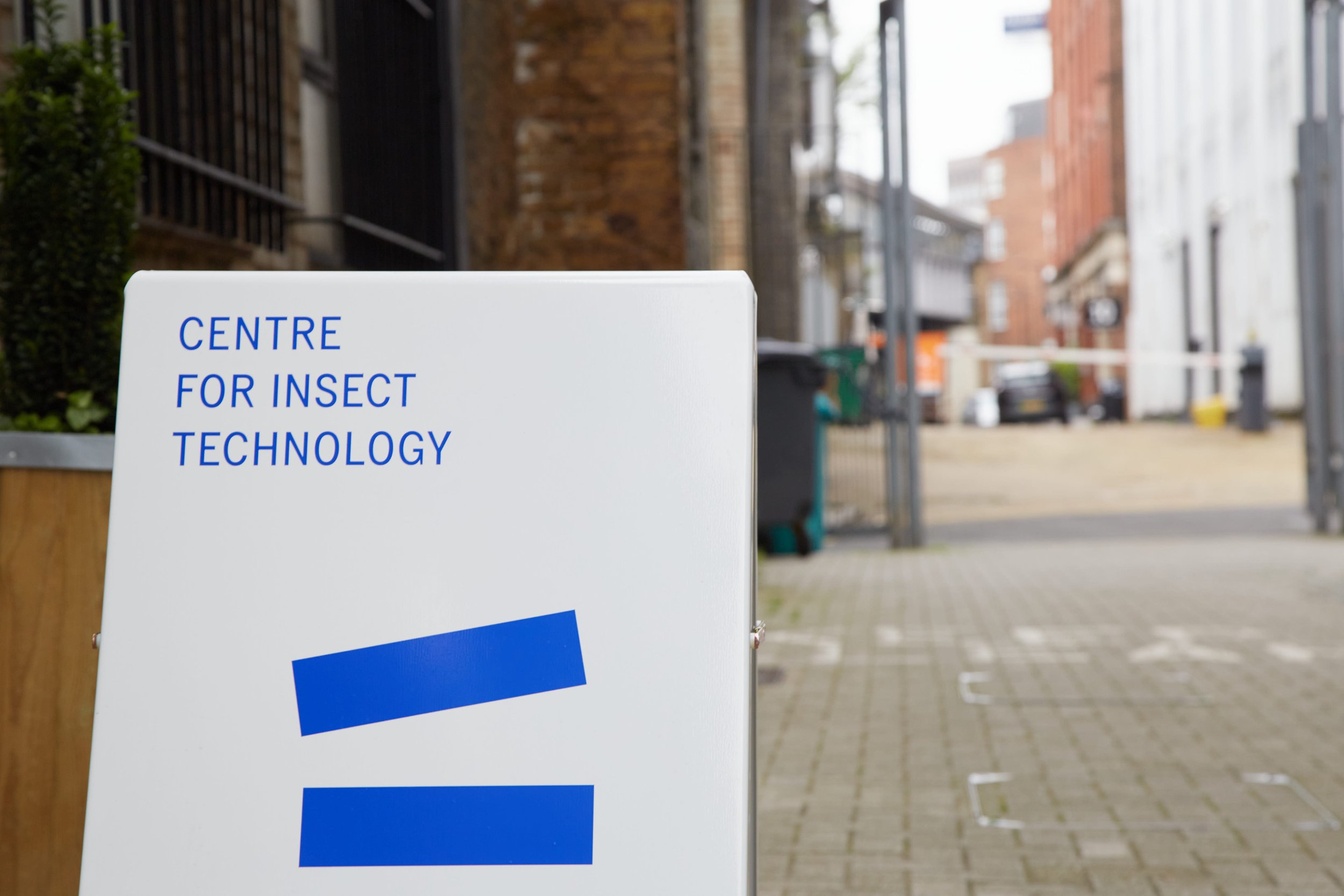
The Centre for Insect Technology (CfIT) is Entocycle’s bespoke modular-sized demonstrator and research and development facility that our in-house entomologists and engineers created.
The purpose of this project was to develop a facility within Entocycle’s head office to showcase our work to clients, whilst conducting research on how to improve processes, technologies and products.
The team encountered multiple challenges when designing and building the centre, but since installation results include the doubling of our egg yield per cubic meter, an average feedstock conversion rate of 25%, an optical dosing machine succeeding 3000 neonates per second and utilising a factory material lifespan of 10 years minimum.
Entocycle’s adaptable and innovative approach with this project gave us more than industry leading results. Through collaboration, our team’s honed in on streamlining our internal processes, resulting in efficient and effective workflows for not only clients projects, but also internal R&D studies.
Implementation
Our team set to designing the centre, with the factory layout set to mimic the life cycle of the black soldier fly (BSF). Beginning with neonates being dosed in crates, leading into their growth phase, then onto either production as larvae or transforming into fully grown BSF, onto to breeding, then the cycle repeating itself again.
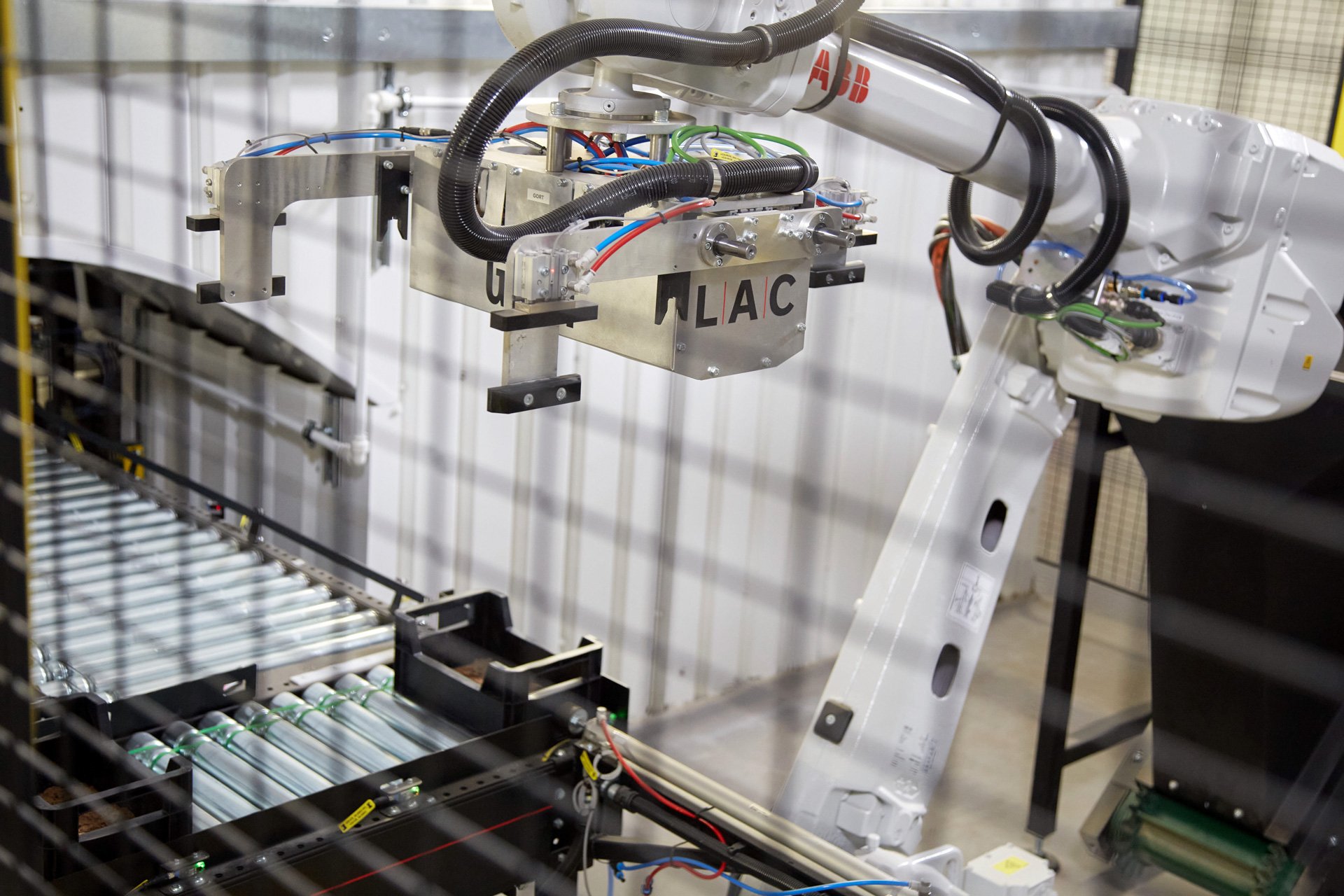
We collaborated with a few external partners for varying areas of the factory, including LAC for the conveyor and robotic systems and Siemens for the automation.
Since feedstock processing trials are a considerable bulk of the work our entomologists conduct, a main requirement of this facility was that it had to be able to utilise whatever feedstocks the customer wants to trial. Because of this, we required additional space for processing equipment alongside the insect farming facility.
Our optical dosing machine (Entosight Neo) that was integrated into the centre has been the work of seven years of iterative design work. However, as we’re constantly evolving and refining our processes, the design of this may change in the future and this was something that we had to consider when building our conveyor system around it - essentially allowing us to tweak things whenever necessary.
Being based in Central London meant that we implemented a rigorous carbon filtration system to ensure that we were adhering to emissions standards. Whilst this additional product is not one that every insect factory would require, having to build this for the CfIT further emphasises our technical abilities, and proves that you can really build an insect factory anywhere - even in the heart of a busy capital city.
Why did this project come to fruition? We discovered the lack of real-world demonstrators.
Naturally, there’s a level of hesitation before signing onto a project as large as an insect farming facility, and there’s historically been difficulty showing modular scalability, so our entomologists and engineers developed a modular demonstrator that removes uncertainty for customers considering large-scale investment by showcasing tangible proof. When clients visit the CfIT, the products they see are what they get, just at a larger quantity.
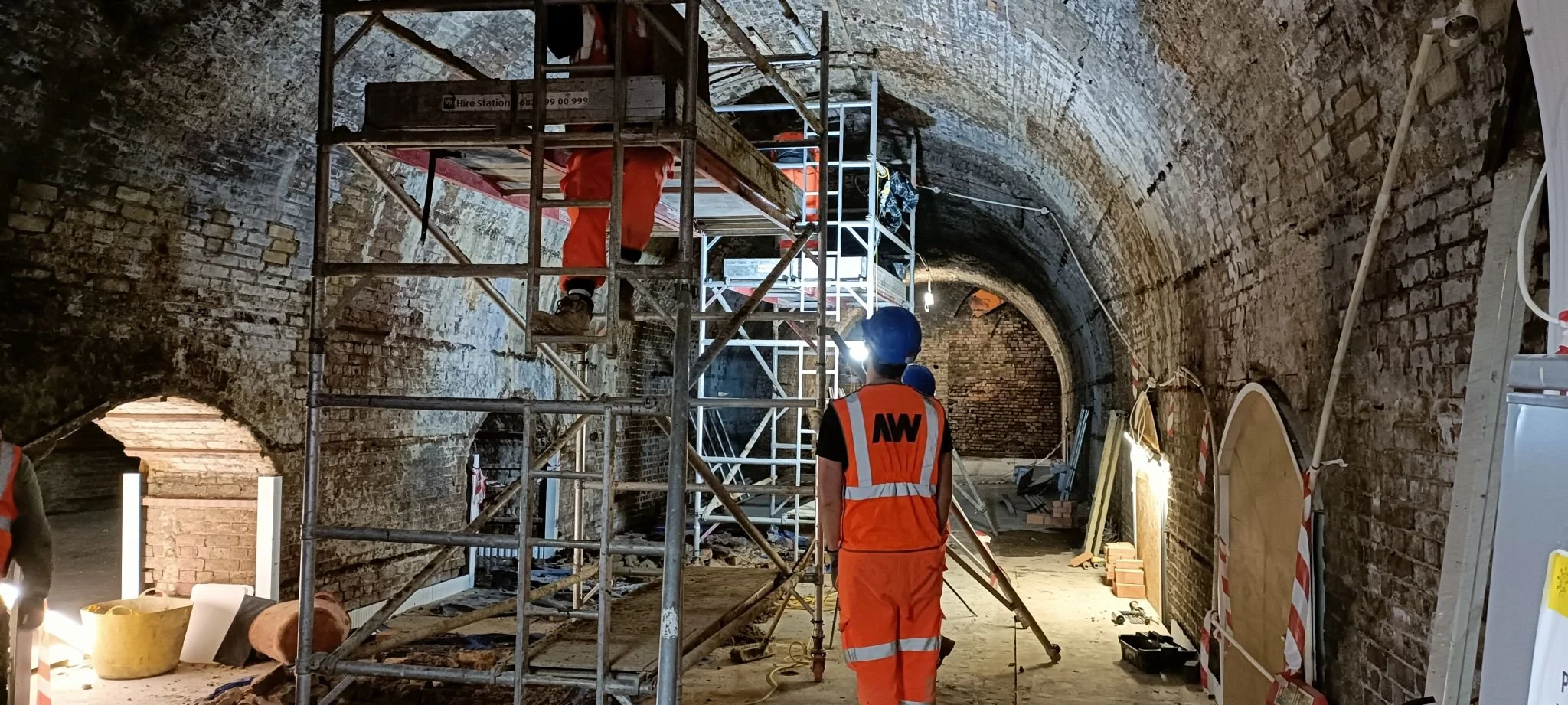
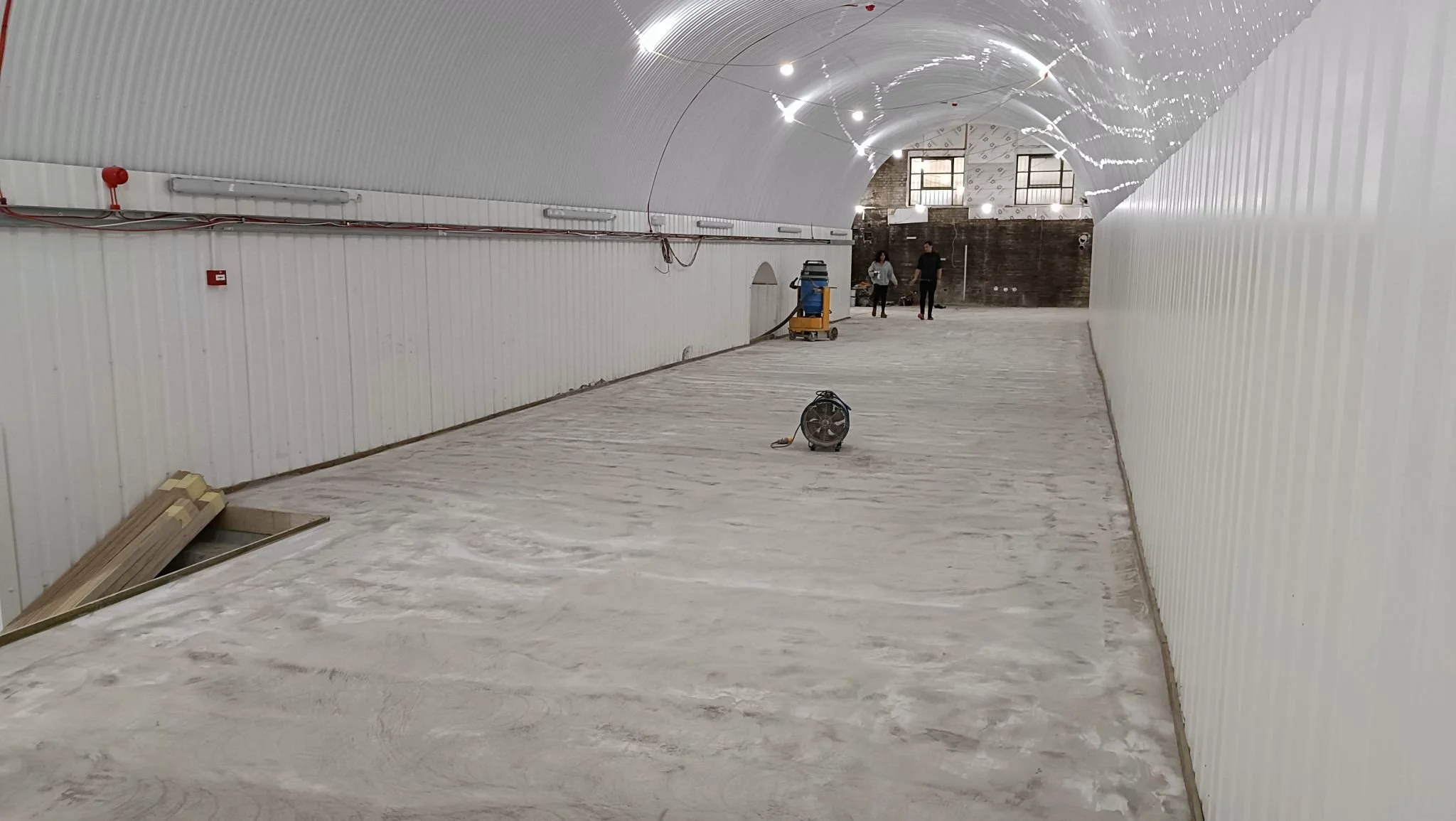
Our entomologists and engineers are also constantly testing new ways of working, refining existing processes and designing new products. There was a requirement for R&D in real-life conditions so any findings would be applicable to the real world . When we had the ability to build our own facility in our headquarters to do just that, the answer was a no-brainer. Our multi-disciplinary team came together to design and build our CfIT in just two years.
Results
Compared to previous benchmarks, after the implementation of the CfIT we doubled the average egg yield per cubic meter during the eight-month optimisation and commissioning period for the breeding system. This directly improves facility efficiency by ensuring that our systems are running at full capacity, meaning there’s no waste in energy consumption.
Through our R&D processes in the CfIT we’ve significantly advanced our optical dosing machine (Entosight Neo) to 3000 neonates per second. The first generation of the machine was dosing 10 neonates per second, now our fourth generation is achieving an increase of +29900% - the monumental improvement here speaks for itself.
We’re now averaging feedstock conversion rates of 25%, which is higher than the industry average. This results in minimal waste, greater density of larvae and more successful yields, meaning you’re getting more effective results from your feedstock investments.
Our in-depth knowledge and research of materials means that we’re building insect farming facilities for a minimum life span of 10 years. Undergoing specific research into corrosive materials when building our CfIT leads to our clients receiving specifications consisting of only the top materials that will withstand many years before requiring refurbishment due to natural causes.
All of our insights are applied to the projects we develop for our clients, as when we’re designing and building each bespoke facility we’re ensuring that every element is optimised for full capacity all year round to result in the highest possible yields.

Impact
By developing our own facility with our in-house team, we’ve been able to reduce the initial risk before scale-up through proving our ability to build in constrained environments. Our robust R&D processes have allowed us to make faster and innovative design decisions, along with the facility allowing clients to trial real feedstocks before committing to full-scale deployment, reassuring them with positive results.
Our applications are currently being utilised throughout the UK on various large-scale projects, and as our in-house team grows, we will continue to optimise further to push the needle on making local sustainable protein a widespread reality in the UK and internationally.